
Choosing the right business in India doesn’t mean discovering an idea nobody has tried before. It means finding a genuine market need and matching it with your budget, skills, time, and experience. In 2026, India offers opportunities across many industries, from low-investment small businesses to scalable ventures requiring more capital. However, finding reliable business ideas can be difficult when many online guides focus on generic suggestions or promoting courses and services. This blog takes a practical approach to help you choose the right business idea in India. You’ll learn about startup costs, basic registrations, investment levels, and promising business opportunities, so you can compare your options and make a more informed decision.
How to Think About Choosing a Business in 2026
Before looking at any list of ideas, run each option through four questions:
- Does this solve a problem people are already paying to solve, or would I be creating demand from nothing
- Can I realistically reach a paying customer within the first three months
- Can I afford the starting cost without taking on serious debt
- Do I have enough interest or skill in this area to keep going once the early months get slow
Most businesses that fail do not fail because the idea was bad. They fail because one of these four checks was skipped. Keep this filter in mind as you go through the sections below.
Easy Businesses to Start With No Prior Experience
These require the least specialised background and the fastest learning curve.
Freelance writing and content services
Every business, from a two-person clinic to a large brand, needs blog posts, product descriptions, and social captions. A laptop and three or four sample pieces are enough to begin.
Social media management
Local shops, coaching centres, and small clinics often know they need an online presence but have no time to manage one. Handling two or three accounts part-time can eventually replace a full salary.
Online tutoring and skill coaching
If you are strong in a subject, academic or otherwise, direct outreach to parents or students remains one of the fastest ways to land your first paying client.
Home-based food business
A tiffin service or a home bakery run through WhatsApp and Instagram needs little beyond your kitchen and basic food safety compliance.
Print on demand and curated reselling
You design or select the products, a third party handles printing and shipping, and you keep the margin, with no warehouse or inventory risk.
Easy to start does not mean easy to sustain. Treat your first three months as a genuine test of demand, not a guarantee of success.
Best Online Business From Home Ideas
Running a business entirely from home has become far more realistic thanks to digital payments, simple website builders, and social commerce.
A niche digital agency
Rather than a generic marketing agency, specialising in one industry, such as helping dental clinics or independent restaurants with their online presence, lets you charge more while competing with fewer people.
Digital courses and e-learning
If you have expertise in anything from spreadsheet skills to a regional craft, recording material once and selling it repeatedly is one of the stronger long-term income models you can build from home.
Content and affiliate income
A blog, YouTube channel, or newsletter built around a topic you genuinely understand takes time to grow but compounds well once an audience exists.
Virtual assistance and back office support
Many small business owners need help with scheduling, email, and admin work but cannot justify hiring full time. This needs almost nothing beyond a laptop and dependable internet.
AI-powered niche tools
You do not need to build a large AI company to benefit from this shift. A small tool that automates one repetitive task for one specific industry, such as drafting property notices for landlords or generating GST replies for small accountants, can be built and sold with a relatively small technical team.
Best Business to Start With Little Money
For readers working with a genuinely tight budget, here is what realistically fits under a small initial spend.
| Business Type | Approximate Starting Cost | What It Needs |
| Freelance services (writing, design, VA work) | Under Rs 20,000 | Laptop, portfolio, internet |
| Social media management | Rs 10,000 to Rs 30,000 | Basic design tools, a few client pitches |
| Home baking or tiffin service | Rs 15,000 to Rs 40,000 | Kitchen equipment, packaging, FSSAI registration |
| Dropshipping or print on demand | Rs 20,000 to Rs 50,000 | Simple online store, supplier tie up |
| Tutoring or skill coaching | Under Rs 15,000 | Study material, a booking or payment system |
| Handmade goods and crafts | Rs 15,000 to Rs 50,000 | Raw materials, an Instagram or marketplace presence |
| Pet care services | Rs 20,000 to Rs 50,000 | Basic equipment, local marketing, trust building |
The common thread here is that every option is service or skilled rather than product or inventory heavy. Inventory is usually what pushes an idea out of reach on a small budget, so building on your time and skill first, then reinvesting profits into inventory later, tends to be the safer order.
Most Profitable Businesses in India Right Now
Profitability depends heavily on execution, but a few categories consistently show stronger margins because of lower overhead relative to what customers are willing to pay.
Specialised digital services
SEO, performance marketing, and content strategy work often run at strong margins once a small team is in place, since the core cost is time and expertise rather than raw materials.
Narrow niche software tools
A small tool solving one specific problem for one specific industry, such as scheduling software for salons or billing tools for clinics, tends to carry high margins once built, because the same product can be resold repeatedly at very little added cost.
Education and exam preparation
Coaching for competitive exams or professional certifications benefits from repeat enrolments, referrals, and low per-student delivery cost once the material exists.
Health, wellness, and personal care
From personal training to specialised grooming or skincare services, this category tends to see consistent repeat spending and strong referral behaviour, which keeps acquisition costs manageable.
Commerce and hyperlocal delivery in smaller cities
Metro markets are largely saturated, but many Tier 2 and Tier 3 cities remain underserved for fast grocery and essentials delivery, and businesses launched there often reach profitability sooner because rent and labour are cheaper.
Electric vehicle infrastructure
You do not need to manufacture vehicles to benefit from India’s EV growth. Neighbourhood charging points and battery-related services are still an open field in most cities outside the largest metros.
Sustainable and eco-friendly products
Urban consumers, particularly younger buyers, are increasingly willing to pay more for biodegradable packaging, refillable products, and plant-based alternatives, which supports healthier margins than equivalent conventional products.
Financial services for underserved towns
Urban fintech is crowded, but smaller towns still have limited access to easy credit, insurance, and basic digital bookkeeping tools, leaving real room for locally focused financial services.
Profit margin should never be the only factor in your decision. A high margin business that takes two years to land its first paying customer can easily be a worse choice than a modest margin business that starts earning from month one.
What Business Expenses You Actually Need to Plan For
This is the part most guides skip entirely, and it is often the real reason first time founders run out of money faster than expected.
- One-time setup costs: Business registration, GST registration where applicable, a domain and basic website, initial equipment, and any licences specific to your industry, such as FSSAI for a food business.
- Recurring monthly costs: Internet and phone, software subscriptions, payment gateway fees, marketing spend, and rent if you are not working from home.
- Often forgotten costs: Bookkeeping help once revenue grows, insurance for physical goods or liability, packaging and shipping if you sell products, and platform fees if you sell through marketplaces or delivery apps.
- Tax obligations: Once your income crosses the applicable threshold, income tax applies based on your slab, and GST registration becomes mandatory once turnover crosses the prescribed limit for your category of business. Keeping clean records from day one, even as a very small operation, saves real stress at filing time.
A simple rule that holds up well in practice: whatever your estimated first year budget is, expect it to run about 20 to 30 percent higher once these smaller recurring costs are added up. Most new founders underestimate ongoing costs far more than they underestimate the initial setup.
How to Register Under Startup India
If your idea has real scaling potential, registering under the Startup India initiative can unlock tax benefits, simplified compliance, and access to government backed funding schemes.
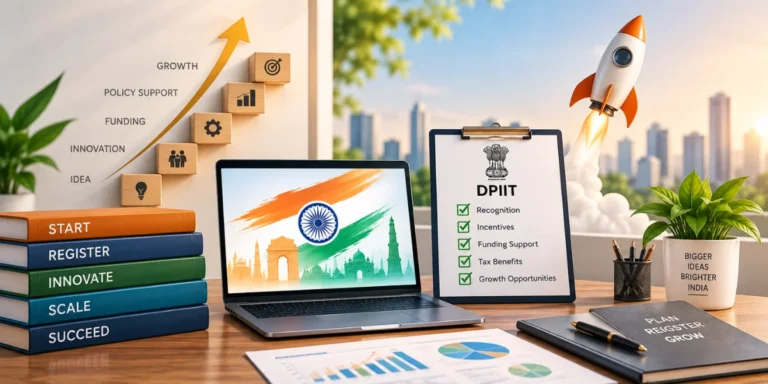
- Confirm eligibility. Your entity should be registered as a private limited company, a registered partnership, or a limited liability partnership, be less than ten years old, and stay under the prescribed turnover limit.
- Register your legal entity first. Complete your company or LLP registration through the Ministry of Corporate Affairs before applying for Startup India recognition.
- Apply on the Startup India portal. Submit your entity details, a short description of how your business is innovative or scalable, and supporting documents such as your certificate of incorporation.
- Receive your recognition certificate. Once approved, you get DPIIT recognition, which opens access to tax exemptions and simplified compliance under several labour and environmental regulations.
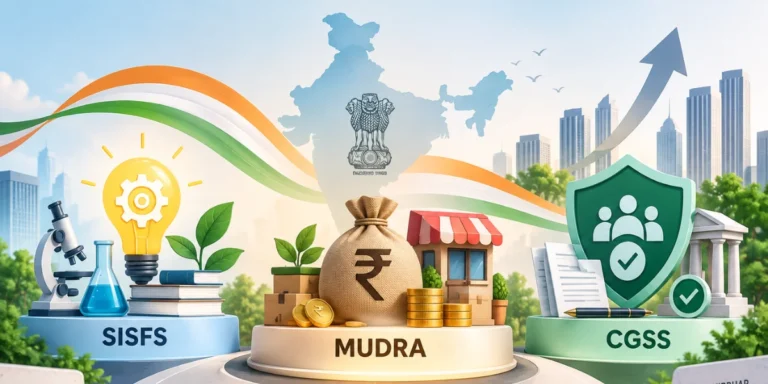
- Look into available funding support. Recognised startups can apply through the Startup India Seed Fund Scheme and may also access other government backed credit programmes designed for early stage ventures.
This process typically takes a few weeks from application to certificate, and it is worth completing even for small businesses that plan to scale, since the tax benefits alone often justify the paperwork.
So What is the Best Business to Start Right Now
There is no single universal answer, but there is a useful way to decide. If your priority is speed and low risk, start with a service based business built on a skill you already have, such as freelancing, tutoring, or social media management. If your priority is long term scale and you can tolerate a slower start, look at niche software, specialised agencies, or education businesses, where the same effort can be sold repeatedly. If you have some capital and want a business with a physical presence, hyperlocal delivery or EV related services in a smaller city offer a realistic middle ground between online simplicity and traditional retail.
The businesses that actually succeed in 2026 will not be the ones chasing whatever idea is trending this month. They will be the ones run by founders who understood their real costs, picked something they could sustain past the first difficult stretch, and built a customer base one relationship at a time.
Frequently Asked Questions
Which online business can I start from home in India?
Digital agencies, e-learning, affiliate content, virtual assistance, and niche AI tools are among the strongest options you can run entirely from home with a laptop and internet connection.
What are the most profitable businesses in India right now?
Specialised digital services, niche software tools, education, wellness services, EV infrastructure, sustainable products, and hyperlocal delivery in smaller cities currently show some of the strongest margins.
How much should I budget for business expenses in the first year?
Beyond your setup cost, plan for recurring costs like software, marketing, and platform fees, and add a buffer of about 20 to 30 percent above your initial estimate to cover costs most founders underestimate.